
(Photo by Czapp Arpad, courtesy of Pexels.)
In life we go through many tests, and it is often these very tests that teach us the most valuable lessons. As the old sayings go, “Necessity is the mother of invention,” and “Adversity is a blessing in disguise.” So, we should learn to see adversities, difficulties, and challenges as a kind of boon—a necessary part of growth.
You might even call difficulties a “necessary evil,” if you wish to use that phrase. Without experiencing some form of “evil,” we would not even know how to live. After all, what are “evil” and “live”? E-v-i-l is simply live spelled backward. So, a wrongly lived life can be the cause of what we call evil. Then what should we do? Should we leave everything in God’s hands and take no action? Then, why would there be the proverb, “God helps those who help themselves”? Life can seem full of contradictions.
We also have responsibilities, and that is why free will has been given to us. God, seated within our hearts as our own conscience, simply guides us. God shows us what is beneficial and what is not and then allows us to choose. When we use our free will, we gradually learn to align it with the Higher Will.
Even to trust God requires free will. Even to surrender ourselves into God’s hands requires free will. God does not forcibly take over; the effort must come from us. Through our own effort, we link ourselves to the Higher Will—“I am Thine, all is Thine, Thy Will be done.” Ultimately, it is all God’s Will, yet we must consciously choose it.
God allows us to act and to learn through our experiences. That is how we grow. Growth always requires some form of opposition. Obstacles draw out our hidden capabilities. Negatives help us recognize the positives. Consider a seed: if you place it on an altar, burn incense and candles, and pray, “Seed, please grow into a beautiful tree,” will it grow? No. The seed will not sprout without encountering resistance.
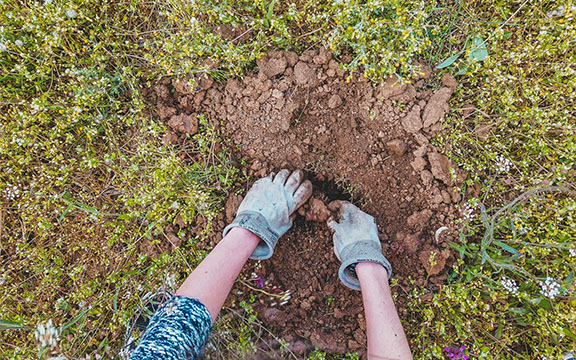
But if you dig a hole, place the seed in the earth, cover it, and gently pack the soil, it slowly pushes its way upward, breaking through the ground. That is how growth works. We need the pressure of opposing forces. If you want stronger muscles, you cannot simply sit and hope—they grow only through resistance.
Life is always full of opposites: positive–negative, good–bad, praise–blame. Our task is to learn from them rather than shrink from what seems difficult. If you sit quietly with your eyes closed, meditating, no one will disturb you. There is no praise, no blame—you are just with yourself. But when you go into the world, someone will say, “What a wonderful job you did,” and someone else may say, “What a terrible job you did.” Meditating and withdrawing can become a kind of escape if that is all we do. Meditation must be balanced with active life. Why? Because without challenges, it takes much longer to reach our spiritual goal.
If you want enlightenment—if you want to awaken spiritually—you need life’s challenges to prepare you. The true test is to find calmness and inner peace in the midst of activity. It is precisely in the midst of life that we are shaped more deeply and awakened more quickly.