When I first studied Raja Yoga, or Patanjali’s Yoga Sutras, in my Yoga Teacher Training Class of 2001 at the Integral Yoga Institute, New York City, I clearly remember Swami Ramananda saying something like, “First your mind talked you into eating the ice cream, then...
What Yoga Teaches Us About Emotional Pain
One of Patanjali’s sutras buried in the Second Pada is: "Pain that has not yet come is avoidable" (2.16). This is very similar to, I would even say, exactly, what the Buddha taught: that suffering can end—as stated in the Third Noble Truth—though we hardly seem to get...
Vrittis: A Dive into the Yoga Sutras
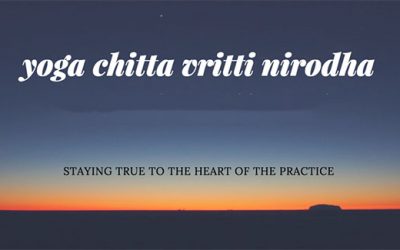
If there is one thing we start to see with Yoga practice, it is that thoughts constantly bombard our minds. Remember being in Paschtimottanasana for what felt like forever with a tornado of swirling thoughts, from that embarrassing event 20 years ago to what’s for...
Asana: Steps to Personal Transformation
Robert Butera, Ph.D. studied at the Yoga Institute in Mumbai, India, where Yoga is viewed as a spiritual practice and a total lifestyle. A contributor to Integral Yoga Magazine and presenter at Satchidananda Ashram–Yogaville, Dr. Butera explains how asana is part of...
Jnana Yoga and Vedanta in the Yoga Sutras
We learn from our study of Yoga and Vedanta that their goals are one and the same: realization of the true Self. Both sages Veda Vyasa, and Sri Patanjali, in his Yoga Sutras, taught that by cultivating viveka (discriminative discernment) the cause of suffering...
Yama & Niyama: A Psychospiritual Perspective
Maharishi Patanjali prescribed inner and outer purification as a prerequisite for pursuing the path of Yoga. Yama, or the five abstinences, might be described as enlightened self-control. Niyama, or the five observances, might be defined as self-regulation. In this...
Patanjali’s Raja Yoga
Patanjali’s Yoga system is written in sutras. A sutra is a terse verse. It is an aphoristic saying. It is pregnant with deep, hidden significance. Rishis of yore have expressed philosophical ideas and their realization in the form of sutras only. It is very difficult...
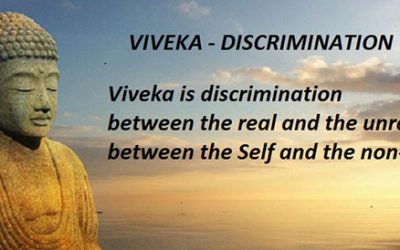
Lessons from Raja Yoga: Viveka (Discrimination)
Patanjali once beautifully said, “Dukham evam sarvaam vivekinaha.” For a viveki, a person with discriminative knowledge, everything is painful. When you realize that everything is painful you cease to develop attachments toward those things. In fact, it is to relieve...
Raja Yoga: The King of Yogas
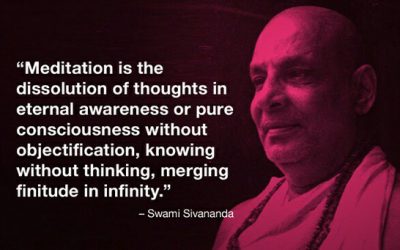
Raja Yoga is the king of Yogas. It is concerned directly with the mind. The Yogi sits at ease, watches the mind and silences the bubbling thoughts. The Yogi stills the mind, restrains the thought-waves and enters into the thoughtless state or asamprajnata samadhi....
Raja Yoga: The Essence of Yoga
When the word Yoga is mentioned, most people immediately think of some physical postures for relaxing and limbering up the body. This is one aspect of the Yogic science, but actually only a very small part and relatively recent in development. The physical Yoga, or...
The Mystic OM
In this article, Integral Yoga master teacher Rev. Jaganath Carrera discusses sutras 1.27 through 1.29 of the Yoga Sutras of Patanjali. In these sutras, Sri Patanjali introduces us to the OM mantra and the practice of mantra japa, which he explains is a most effective...
Integrating the Yoga Pathways of Meditation & Devotion
Our whole experience of life is based on the stories we tell ourselves about what occurs. These stories begin with our mind’s interpretation of what it perceives. Swami Vivekananda describes this like an oyster making a pearl. A parasite gets inside the shell, and...
Hatha Yoga: Caring for the Human Temple
The human body is a temple. Keep it strong and supple. Treat it gently. Never ignore the body, because it's the most important instrument. Whatever you do, you need a body. That's why the ancient Yoga teachings always emphasized taking good care of the body. Babies'...
The Wisdom of Patanjali and J. Krishnamurti
By Ravi Ravindra, PhD Over a period of 20 years, Dr. Ravindra engaged in conversations with the famed philosopher Jiddu Krishnamurti. He kept notes of these conversations and later wrote several books about Krishnamurti. As he pondered Patanjali’s teachings, Dr....
The Best Method of Meditation?
Students often ask me if there is one method of meditation that is the best. There is no one particular way of meditation. Meditation is the same process for all of us, no matter what technique we use. It is only the object or idea for meditation which may vary...
Sanskrit and the Yoga Sutras
The "certainty of freedom" is a striking concept. Although the concept of spiritual freedom expressed through a word such as "liberation" exists in the English language, the actual meaning as we hear it is quite abstract, somehow foreign to the reality of our day to...