

Photo by Wonderlane, courtesy of Unsplash.com
None of what you experience – thoughts, feelings, sensations, perceptions – is what you essentially are. You are the silent, aware presence that knows them. In this brief exploration, you are invited to investigate the one element of experience that is completely effortless, that requires no effort to manufacture, practice or maintain. Whilst some initial effort may be needed to extricate yourself from the drama of experience, each time you return to your Self, the habit of forgetting weakens. For the mind, there is seeking and resisting, enlightenment and ignorance, but for the silent, aware presence that you essentially are, there is only its own inherent peace.
Just be aware of the full spectrum of your experience – thoughts, memories, feelings, bodily sensations, sights, sounds, tastes, textures, smells and so on. None of these are what you essentially are. You are the being, the silent presence that knows them.
Just take one small step back from the content of your experience to the silent, aware presence that lies in the background. This silent, aware presence that knows the entirety of your experience is at once utterly, intimately one with all experience, yet is not conditioned in any way by it, just as the screen is one with all the images that appear on it and yet does not share their characteristics
Your being is transparent, empty of all qualities or conditions, silent. This aware presence may feel neutral, but the more you rest in it, the more deeply you sink into it, the more deeply it reveals its nature of peace and, in time, a deep, abiding joy.
This silent, aware presence is the only element of your experience that is completely effortless. Even thinking and breathing require a degree of effort, but your true nature of simply being, or being aware, is effortlessly present at all times, under all circumstances. It does not need to be manufactured, practised nor maintained.
If anything, it is just a noticing, a remembering: ‘Oh yes, of course, I’m not the content of my thoughts and feelings. I’m not my activities, perceptions, or relationships and so on. I’m just this silent, aware presence with which all experience is known and within which all experience arises.’
Of course, if you are habitually lost in the drama of experience, some initial effort is required to extricate yourself from the content of experience and return to your Self. And if this is the case, then you should make that simple effort to come back to your Self, to remember your Self.
In time, through force of habit, your attention will again be drawn out into the content of experience – thoughts, feelings, sensations, perceptions and so on. And you will again have to make a small effort to disengage from it and return to your Self. But each time you return to your Self, this habit of forgetting weakens. And in time, you find that your Self, this silent, aware presence, is not something you merely visit from time to time in between all your other experiences, but you come to live there as that.
For the mind, there is seeking and resisting, there is enlightenment and ignorance, but for the silent, aware presence that you essentially are, there are none of these things. It just is what it is, at rest, seeking nothing, resisting nothing, with no knowledge of enlightenment or ignorance.
Enlightenment and ignorance are like light and dark for the earth. The earth goes through phases of light and dark during the day and night. But for the sun, there is no darkness, and therefore it need not conceptualise itself as light. It is simply eternally shining.
It’s the same with your being. For the mind, there is forgetting and remembering, ignorance and enlightenment. But for your Self, it’s just itself, always present, always aware, and always at rest.
About the Author:
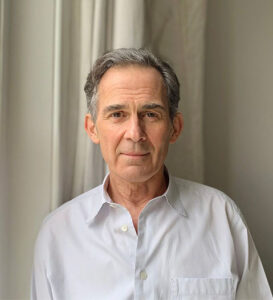 Rupert Spira came across the poetry of Rumi at the age of fifteen, in 1975, and soon after this met his first teacher, Dr. Francis Roles, at Colet House in London. Dr. Roles was himself a student of Shantananda Saraswati, the Shankaracharya of the North of India. Under his guidance Rupert learnt mantra meditation and was introduced to the classical system of Advaita, or non-duality, which formed the foundation of his interest and practice for the next twenty-five years. Throughout these years Rupert also studied the teachings of Ramana Maharshi and Sri Nisargadatta Maharaj on a continuous basis.
In the mid-1990s Rupert met Francis Lucille and over the next twelve years Rupert spent all the spare time that work and family commitments would allow with Francis, exploring the sense of separation as it appears in the mind in the form of beliefs and, more important, how it appears in the body as feelings of being located and limited. Francis also introduced Rupert to the Direct Path teachings of Atmananda Krishna Menon and the Tantric approach of Kashmir Shaivism, which he had received from his teacher, Jean Klein.
Information on Rupert’s retreats and webinars can be found here and his YouTube channel is a great source of inspiration as well. His children’s book, I Am Always I as well as all his books are available from his website, Amazon and all booksellers.